
How to Build an Operating System for Your Business
Every business has a way decisions happen and work moves. The question is whether that operating system was deliberately designed.
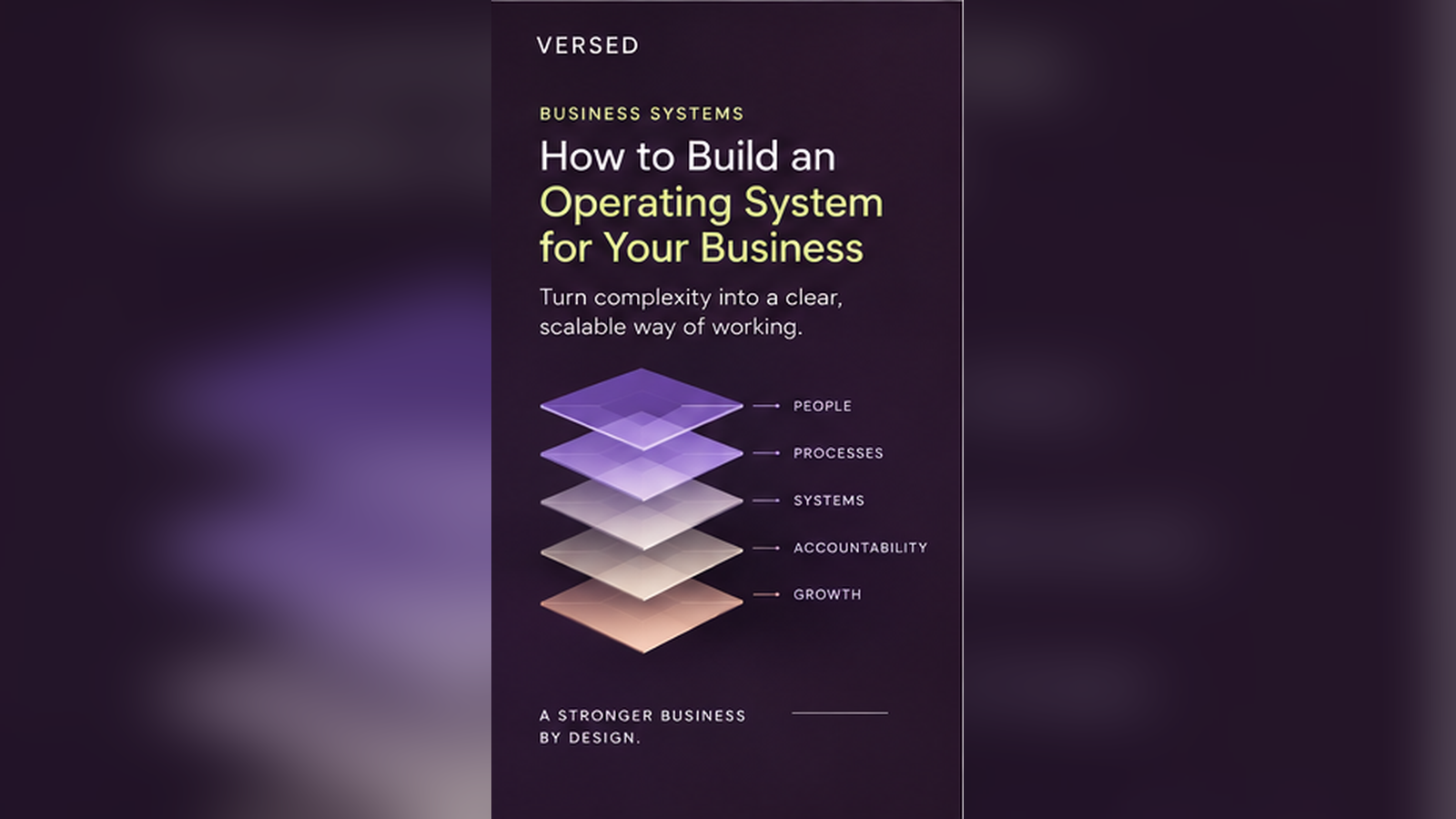
Your business already has an operating system.
The question is whether anyone designed it.
Every company has a way decisions happen, information moves, projects get managed, meetings run, clients get delivered, problems escalate, and priorities get translated into work.
If you haven't deliberately built those mechanisms, people create them themselves.
That's when the operating system becomes Slack messages, spreadsheets, founder memory, scattered SOPs, recurring meetings, and whatever everybody remembers from last time.
Start with outcomes, not software
Don't begin with:
Should we use ClickUp or Notion?
Start with:
What does this business need to execute reliably?
Technology comes later.
1. Priorities
People need to know what matters now.
Company priorities should translate into team priorities and actual work—not live in a strategy presentation nobody opens again.
2. Ownership
Every important outcome needs an owner.
Not five collaborators who assume somebody else is handling it.
Ownership means someone is accountable for moving the outcome forward.
3. Processes
Recurring work needs a repeatable path.
Not necessarily a 47-step SOP.
Enough structure that the outcome doesn't depend entirely on who happens to be doing it.
4. Information
Where does knowledge live?
Where is the source of truth?
How does someone find what they need without asking another person?
Knowledge architecture is part of operations.
5. Technology
Now choose the tools.
CRM.
Documentation.
Communication.
Reporting.
The stack should support the operating model—not determine it.
6. Operating cadence
Define the rhythms through which the company operates.
Daily where needed.
Weekly.
Monthly.
Quarterly.
Meetings should have purposes. Reports should drive decisions. Reviews should produce actions.
7. Accountability and feedback
A system needs a way to reveal when it isn't working.
Track meaningful outcomes.
Surface blockers.
Review what changed.
Then improve the system.
Your operating system should reduce dependence on memory
Especially the founder's.
When priorities, responsibilities, processes, information, and decisions are visible, the business stops requiring one person to hold everything together.
That's when systems start creating leverage.
Related services
Continue Reading
How to Document Processes Without Creating an SOP Graveyard
Create process documentation that supports real work with clear owners, decision points, examples, and maintenance triggers.
How to Choose a Project Management System for a Growing Business
Choose a project management system based on real workflows, role-specific visibility, integrations, and the level of complexity your team can govern.