
How to Document Processes Without Creating an SOP Graveyard
Useful process documentation lives close to the work, transfers context, and has a clear reason to stay current.
Most businesses don't actually have an SOP problem.
They have an SOP usage problem.
Someone spends weeks documenting everything.
The documents get uploaded.
Six months later the team is still asking the same questions in Slack.
Meanwhile, half the SOPs describe processes that no longer exist.
Congratulations.
You've built a documentation museum.
Don't document everything
Start with processes where documentation actually reduces risk or repeated effort.
Good candidates include work that is:
Repeated frequently.
Easy to get wrong.
Dependent on one person's knowledge.
Important to client experience.
Necessary for onboarding.
Subject to compliance or quality requirements.
Don't create an SOP because a process technically exists.
Create one because somebody will need it.
Document the outcome first
Every useful process document should answer:
What is this process trying to accomplish?
That context matters.
Without it, people can follow every step perfectly and still make the wrong decision when something unusual happens.
Capture decisions, not just clicks
“Click the blue button” is documentation.
But it isn't operational knowledge.
Also explain:
When should this process happen?
Who owns it?
What inputs are required?
What does successful completion look like?
What exceptions are common?
When should the issue be escalated?
That's what allows people to operate without repeatedly asking the person who originally designed the process.
Put documentation where work happens
A perfect SOP nobody can find is functionally nonexistent.
Connect documentation to the workflow.
Link the onboarding SOP from the onboarding process.
Link QA instructions from the QA task.
Link templates from the place people actually use them.
Reduce the distance between doing the work and finding the answer.
Give every SOP an owner
Processes change.
Documentation needs ownership too.
The owner doesn't have to personally rewrite every document.
They do need responsibility for making sure the documentation still reflects reality.
Archive aggressively
Outdated documentation is sometimes worse than no documentation.
People trust it.
Create a simple lifecycle:
Draft.
Active.
Needs Review.
Archived.
Then actually archive things.
Your knowledge base should help people make decisions—not preserve the archaeological history of your company.
Related services
Continue Reading
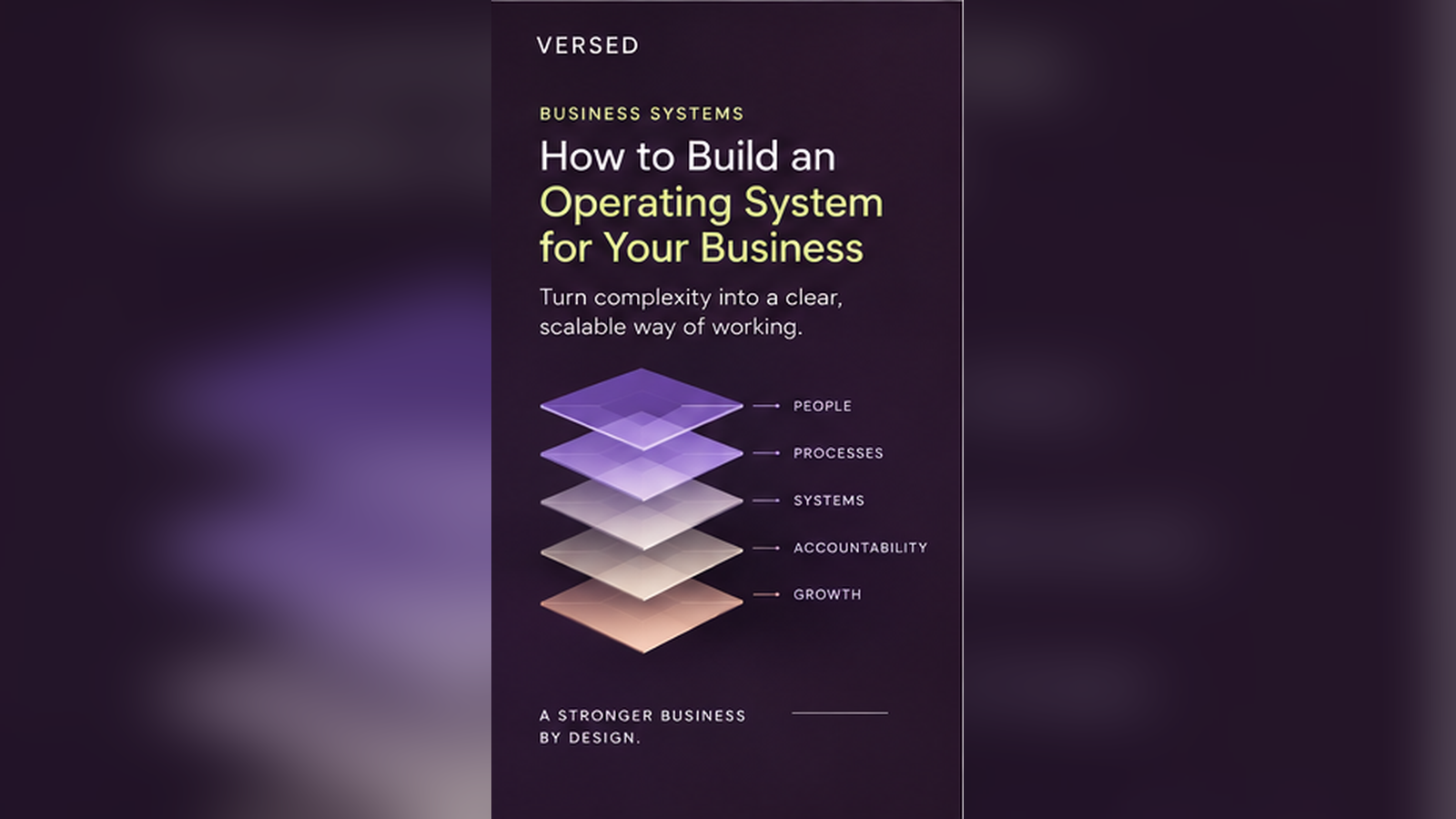
How to Build an Operating System for Your Business
Build an operating system around priorities, ownership, workflows, information, technology, and a management rhythm that supports reliable execution.
How to Choose a Project Management System for a Growing Business
Choose a project management system based on real workflows, role-specific visibility, integrations, and the level of complexity your team can govern.