
How to Reduce Founder Dependency Without Losing Control
Control becomes more scalable when it comes from clear standards, useful visibility, and defined escalation—not constant founder intervention.
There's a reason many founders struggle to step back.
They've seen what happens when they do.
Something gets missed.
Quality slips.
A decision gets made without enough context.
A client experience changes.
So the founder gets involved again.
The lesson becomes:
If I want this done properly, I need to stay close to it.
The problem isn't necessarily that the founder needs to “let go.”
Often, the business hasn't built enough infrastructure to make letting go rational.
Visibility and involvement aren't the same thing
This distinction changes everything.
You can know how the business is performing without participating in every workflow.
You can maintain quality without personally reviewing every deliverable.
You can retain strategic control without making every operational decision.
That requires replacing personal involvement with operational visibility.
Define decision rights
Delegating a task isn't enough.
People need to understand:
What can I decide?
What needs approval?
When should something be escalated?
What outcome am I responsible for?
Where are the boundaries?
Without those answers, sensible employees escalate decisions upward.
Usually to the founder.
Build reporting around exceptions
Founders don't need every piece of information.
They need the information that changes a decision.
Good reporting should make it easy to see:
What's on track?
What's at risk?
What changed?
Where is leadership needed?
That gives the founder visibility without making them the company's human status dashboard.
Document judgment, not just steps
Weak SOP:
Click here. Then click here.
Better documentation explains:
Why does this process exist?
What does good look like?
What decisions may arise?
What exceptions matter?
When should someone escalate?
That transfers more than tasks.
It transfers context.
Create accountability that doesn't require chasing
If the founder has to repeatedly ask whether work is finished, the business doesn't have visibility.
It has follow-up.
Ownership, deadlines, status definitions, dashboards, and operating cadence should surface problems before leadership has to go looking for them.
Step out gradually
You don't need to disappear from a function overnight.
Move from:
Do → Approve → Review → Monitor → Exception only
Not every responsibility will travel through every stage.
But this gives the team a controlled path toward ownership.
Control comes from better systems
Micromanagement feels like control because you can see everything happening.
But it doesn't scale.
Operational control comes from knowing that responsibilities are clear, important information is visible, risks escalate appropriately, and the organization can execute without requiring your attention at every step.
That's a much stronger form of control.
Related services
Continue Reading

7 Signs You've Become the Bottleneck in Your Business
Seven observable signs that decisions, delivery, and team coordination still depend too heavily on the founder.
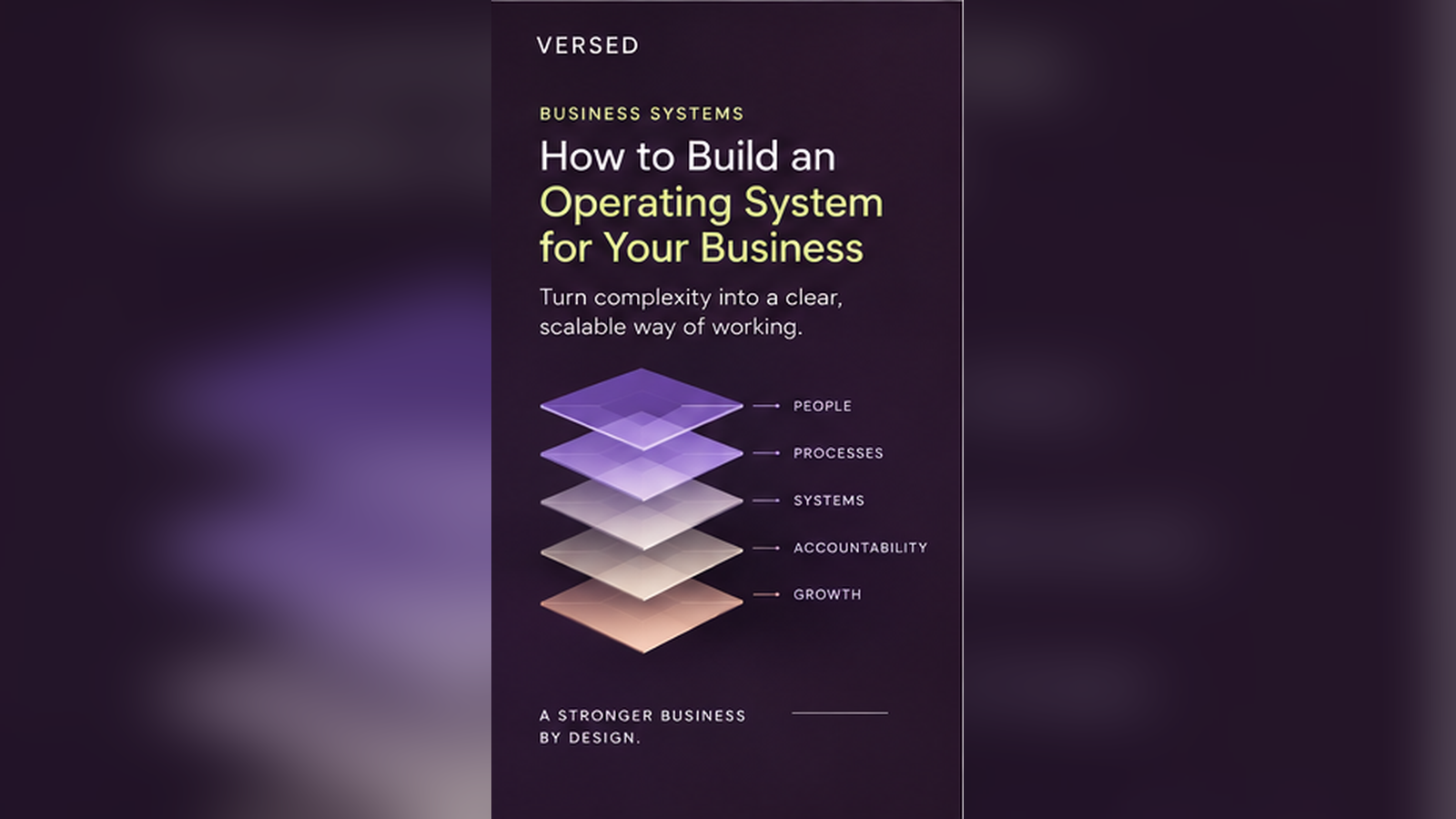
How to Build an Operating System for Your Business
Build an operating system around priorities, ownership, workflows, information, technology, and a management rhythm that supports reliable execution.