
AI Automation for Small Businesses: What Should You Actually Automate?
Start with predictable work where AI can meaningfully assist—not with a vague objective to use AI everywhere.
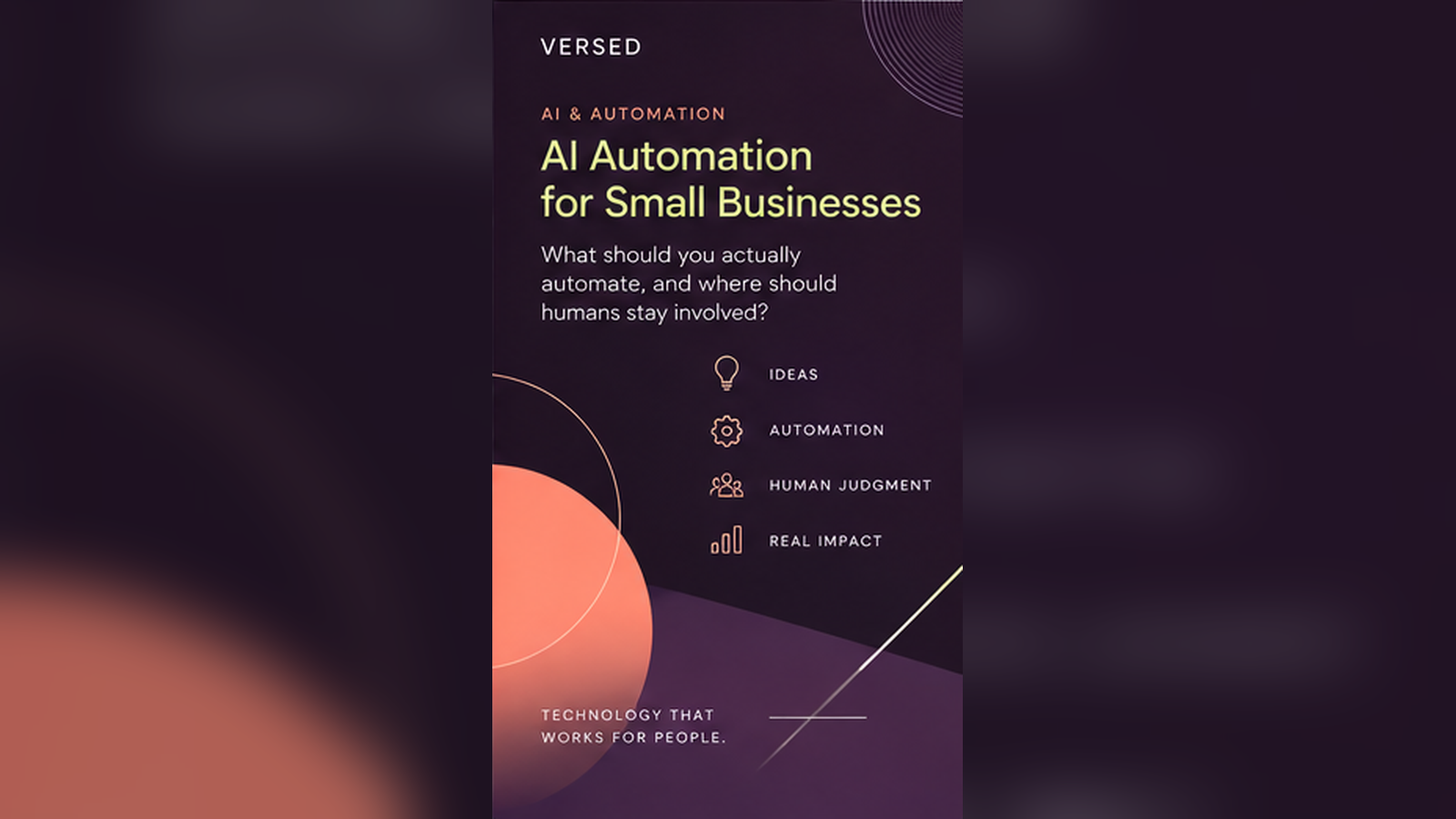
AI has made it possible to automate work that traditional automation couldn't handle very well.
That's exciting.
It has also created a strange new business objective:
“We need to use AI.”
That's not an objective.
The better question is:
Where are people spending time on predictable work where AI could meaningfully assist?
Start there.
AI automation vs traditional automation
Traditional automation is excellent when rules are clear.
If X happens, do Y.
AI becomes useful when the workflow involves less structured information.
Reading.
Summarizing.
Classifying.
Extracting.
Drafting.
Comparing.
Interpreting language.
That means the strongest systems often combine both.
Traditional automation handles the predictable routing.
AI handles the unstructured information.
Humans handle decisions where judgment, risk, relationships, or accountability matter.
Good early AI automation opportunities
Meeting intelligence
Turn meetings into summaries, decisions, action items, and structured follow-up.
Knowledge retrieval
Help teams find answers across existing documentation without manually searching through dozens of files.
Information classification
Categorize form submissions, messages, requests, documents, or leads before routing them.
Draft generation
Create first drafts of recurring communications, reports, proposals, documentation, or content.
The emphasis should be on first draft where human review matters.
Research and synthesis
Collect and summarize information for someone to review and make a decision.
CRM assistance
Summarize interactions, prepare notes, classify leads, draft follow-ups, or identify missing information.
Operational reporting
Turn structured operational data into useful summaries that highlight exceptions and patterns.
What shouldn't you automate blindly?
High-stakes decisions.
Sensitive customer situations.
Important financial decisions.
Anything where errors create serious consequences.
Work where the human relationship is itself part of the value.
And processes nobody understands well enough to evaluate when the AI is wrong.
AI confidence is not the same thing as accuracy.
Human oversight should be designed into the workflow based on the consequences of an error.
Don't build an AI layer over operational chaos
If five people have five different ways of doing something, adding AI won't necessarily solve the problem.
You may simply create a sixth.
Standardize the underlying process first.
Define the inputs.
Define the expected outcome.
Identify where judgment is required.
Then decide what AI should handle.
Start boring
The highest-value AI implementation in your company may not be a flashy autonomous agent.
It may be something that saves your team eight minutes, 40 times a week.
Or makes sure every client call becomes structured follow-up.
Or turns scattered internal knowledge into something employees can actually retrieve.
That's fine.
Useful beats impressive.
Every time.
Related services
Continue Reading
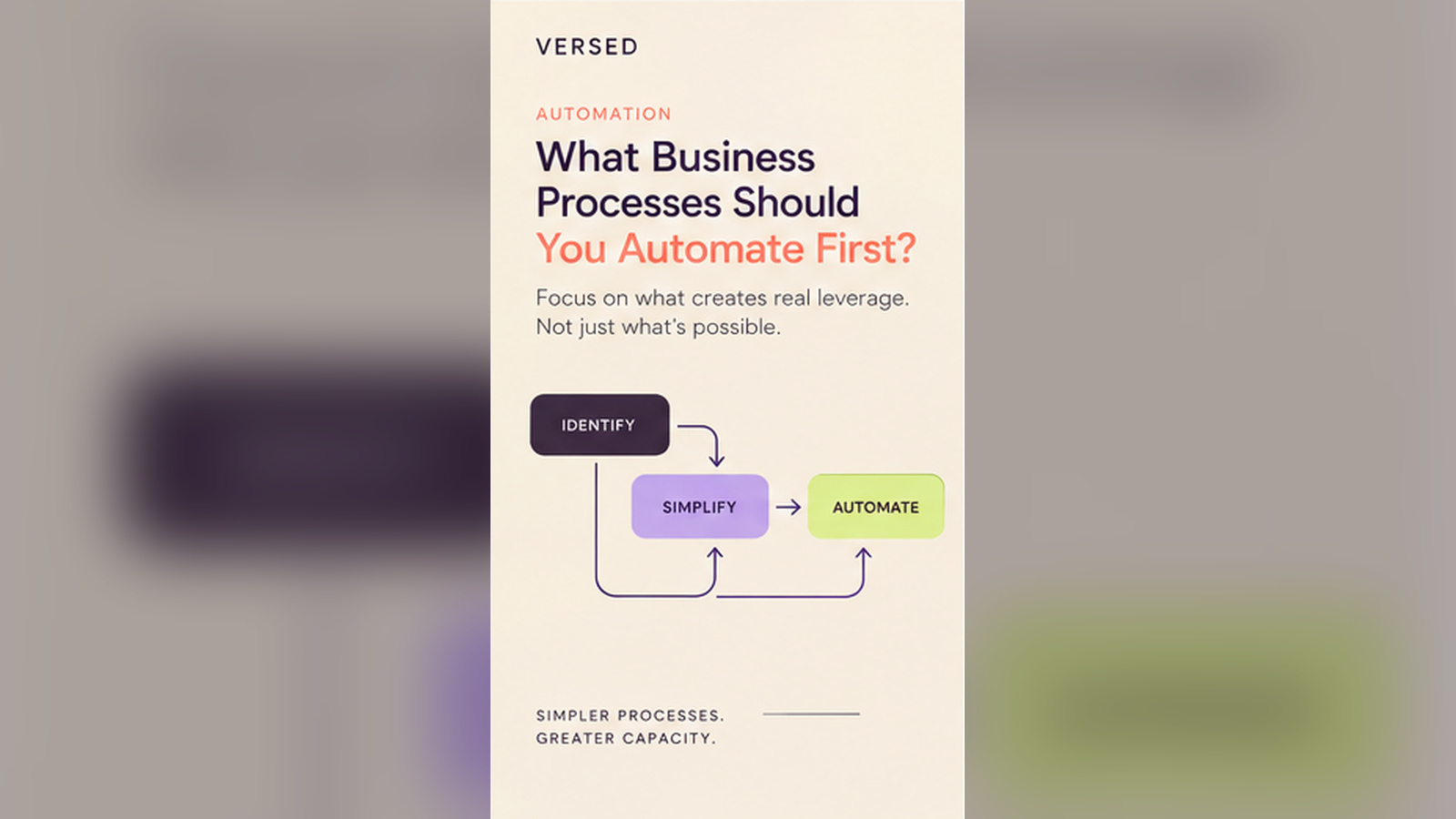
What Business Processes Should You Automate First?
Prioritize automation using repetition, clear rules, delay, error risk, and the value of reducing manual handoffs.
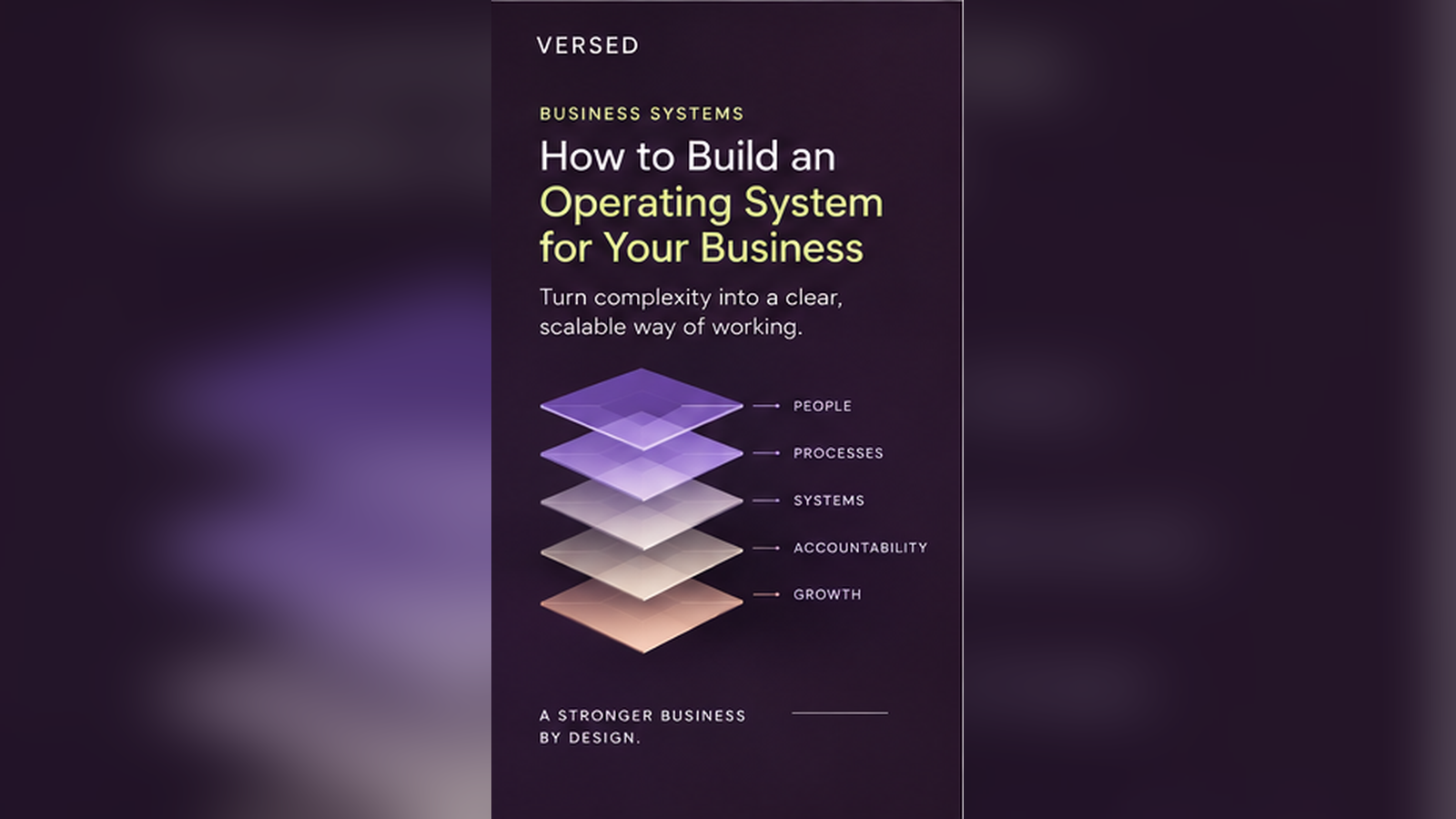
How to Build an Operating System for Your Business
Build an operating system around priorities, ownership, workflows, information, technology, and a management rhythm that supports reliable execution.