
What Business Processes Should You Automate First?
The first automation should remove a meaningful, repeatable source of friction—not preserve a broken process more efficiently.
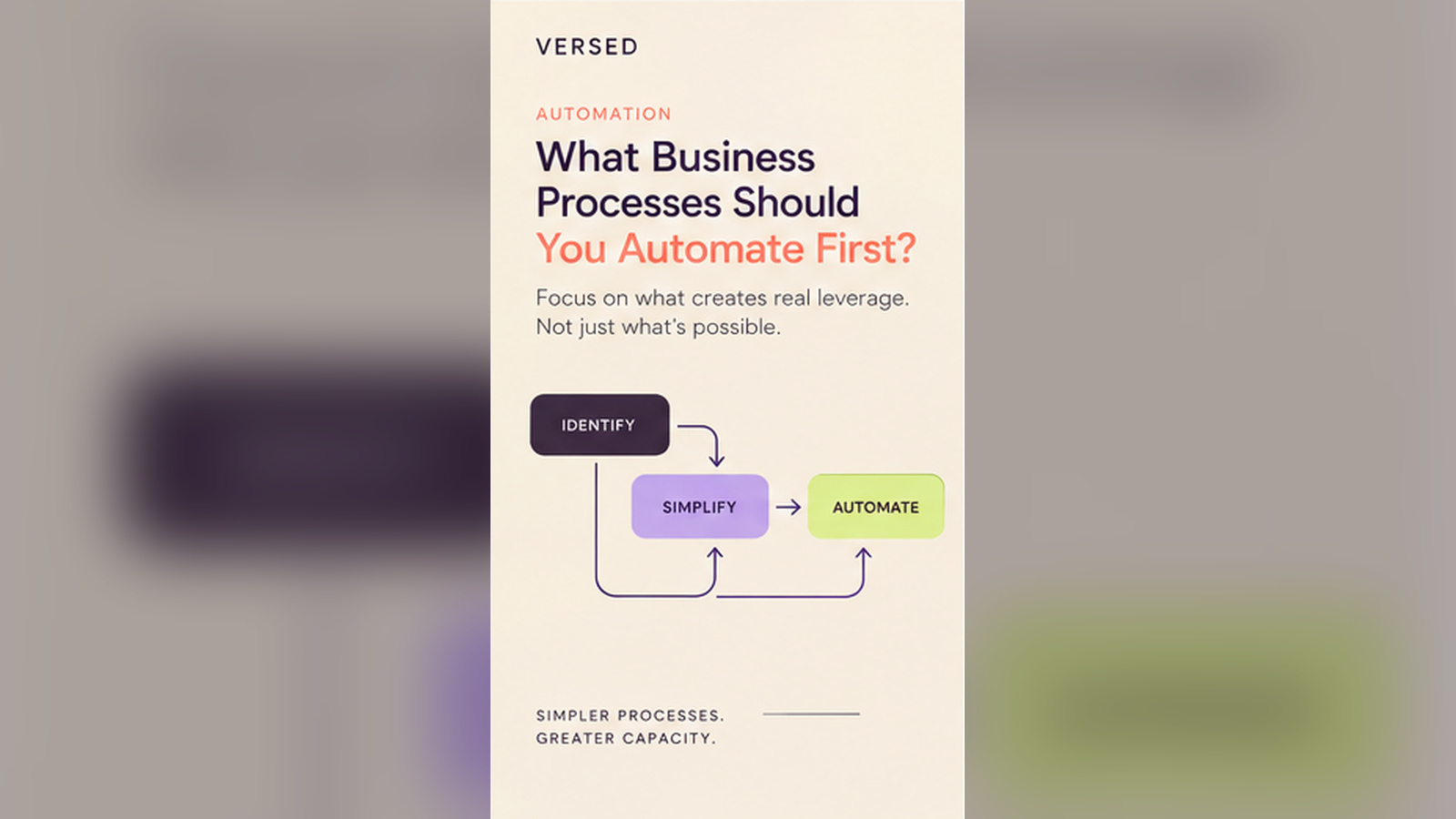
The easiest way to waste money on automation is to start with the automation.
A workflow is annoying.
Someone finds a tool.
Three integrations later, the annoying workflow is now an automated annoying workflow.
Before asking how to automate something, ask whether the process deserves to exist in its current form.
The best first candidates are repetitive and predictable
Look for processes that happen frequently and follow reasonably consistent rules.
Examples include:
Lead routing.
CRM updates.
Form processing.
Confirmation emails.
Internal notifications.
Task creation.
Client onboarding steps.
Resource delivery.
Recurring reporting.
Status updates.
Follow-up reminders.
These are usually easier to automate safely because the inputs, decisions, and expected outputs are relatively clear.
Look for high-frequency, low-judgment work
A useful automation candidate often has four characteristics:
It happens frequently.
It follows predictable rules.
It consumes meaningful human time.
It requires little judgment.
The more judgment a workflow requires, the more carefully automation should be introduced.
Calculate friction, not just hours
A five-minute task repeated 100 times matters.
But so does a task that repeatedly interrupts someone's deeper work.
Automation can create value by reducing:
Context switching.
Waiting.
Duplicate data entry.
Forgotten follow-ups.
Manual handoffs.
Unnecessary status checking.
Don't automate exceptions first
If a process has 14 different paths depending on unusual circumstances, it may not be your best first automation project.
Start with the stable 80%.
Let humans manage unusual cases until there's enough data to justify something more sophisticated.
Simplify before automating
Ask four questions:
Should this step exist?
Can it be removed?
Can it be standardized?
Does a human need to decide this?
Only then ask:
How do we automate it?
That sequence tends to produce much cleaner systems.
Related services
Continue Reading
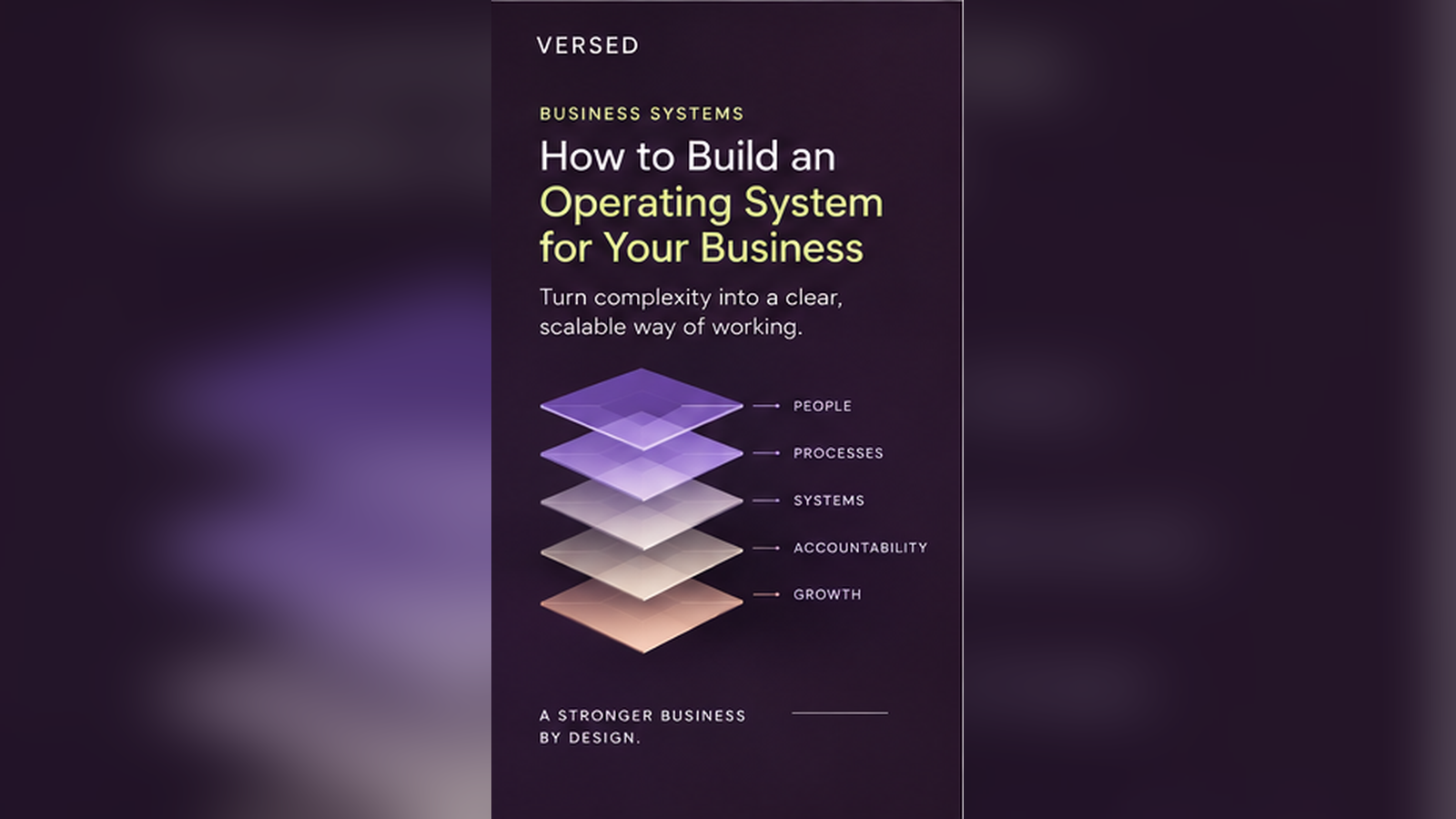
How to Build an Operating System for Your Business
Build an operating system around priorities, ownership, workflows, information, technology, and a management rhythm that supports reliable execution.
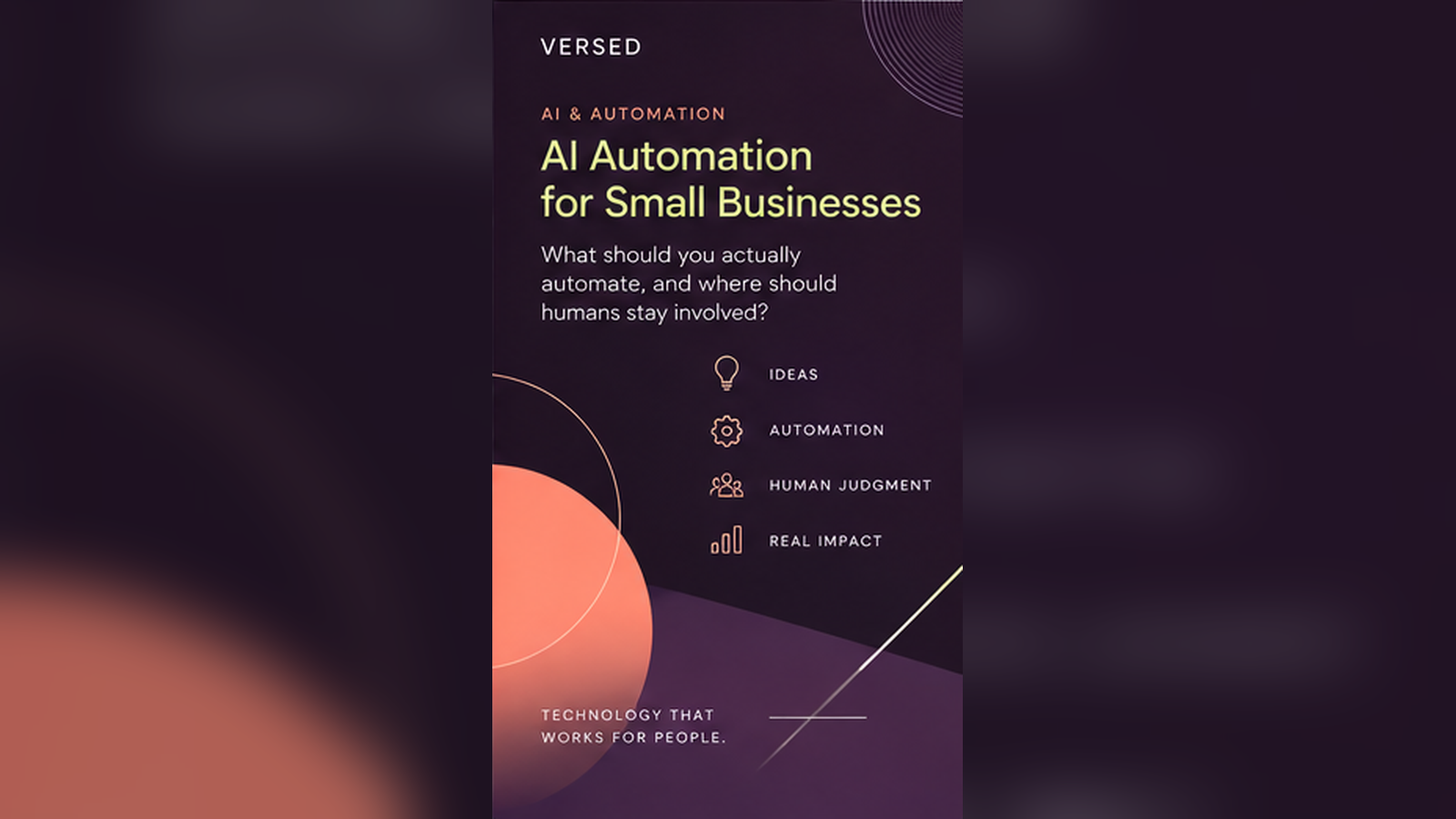
AI Automation for Small Businesses: What Should You Actually Automate?
Find where AI can assist with predictable work, how it differs from traditional automation, and where human judgment should remain.